Spinner vs. Flapper Decoys: Which Motion System Should Hunters Choose?
Posted by Lucky Duck Team on Jan 28th 2026

The motion decoy you choose before sunrise often determines whether birds commit to your spread or pass overhead. With 14.4 million hunters hitting the field in 2022 according to the U.S. Fish and Wildlife Service's National Survey, waterfowl face pressure across every flyway. Your motion system can tip the scales in your favor.
Spinners and flappers dominate the motion decoy market. Both have earned their reputation in duck blinds and goose pits, but each shines under different circumstances. Understanding when to use which system turns average setups into productive spreads.
Spinner vs. Flapper Comparison
|
Feature |
Spinner Decoys |
Flapper Decoys |
|
Motion Type |
Rotating wings creating strobe effect |
Up-and-down wing flapping |
|
Best Weather |
Sunny, calm days |
Works in all conditions |
|
Visibility Range |
Two to three times human vision |
Moderate to close range |
|
Best Season |
Early season |
Mid to late season |
|
Hunting Pressure |
Low to moderate |
Moderate to high |
|
Target Species |
Ducks (mallards, teal, divers) |
Geese and pressured ducks |
|
Ideal Terrain |
Open fields, large water bodies |
Small marshes, timber, tight spots |
|
Goose Response |
Negative (turn off when geese approach) |
Positive (attracts geese) |
|
Power Consumption |
8-12 hours per battery set |
4-8 hours per battery set |
|
Setup Complexity |
Simple stake or pole mount |
More complex mounting |
Understanding Spinner Decoys
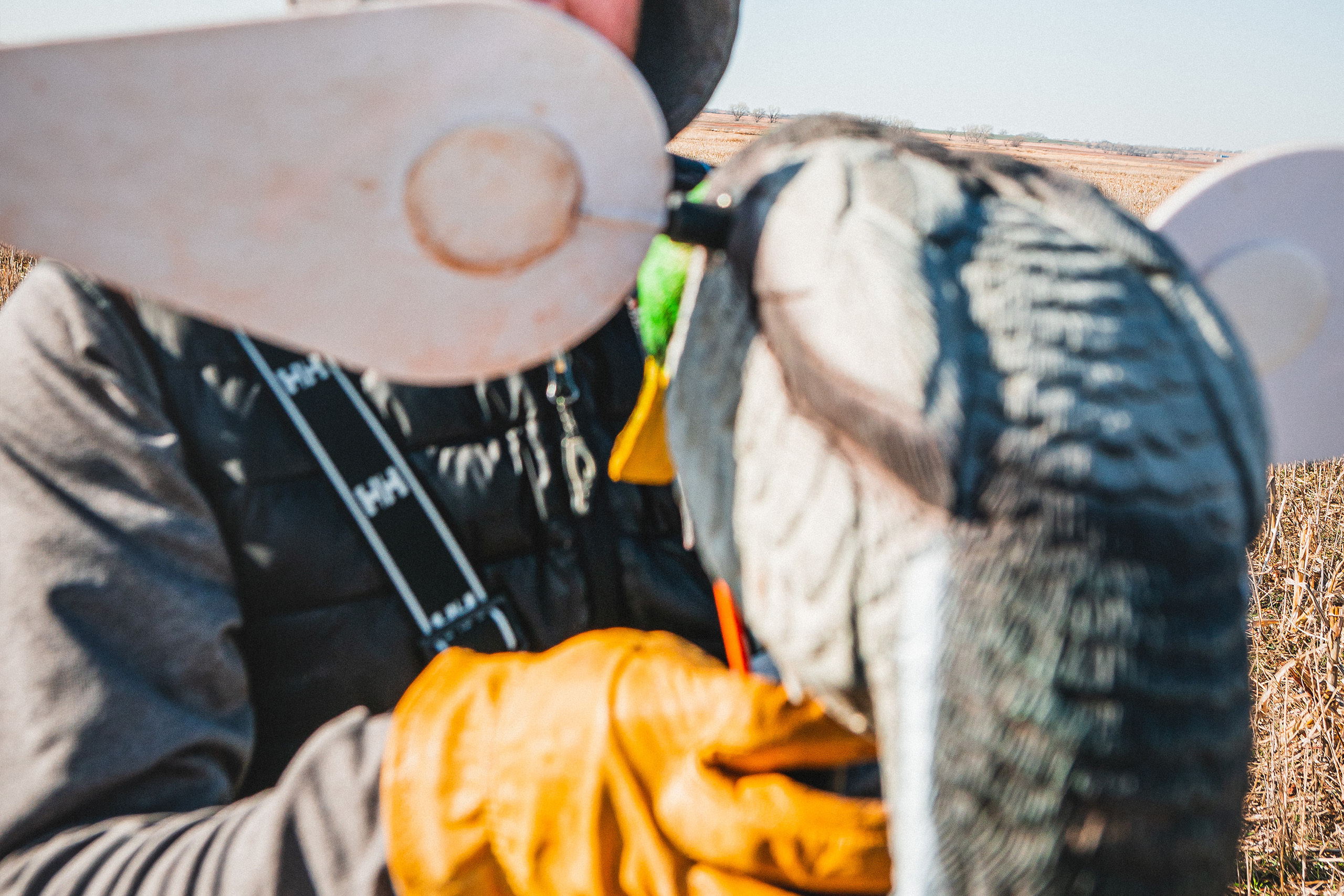
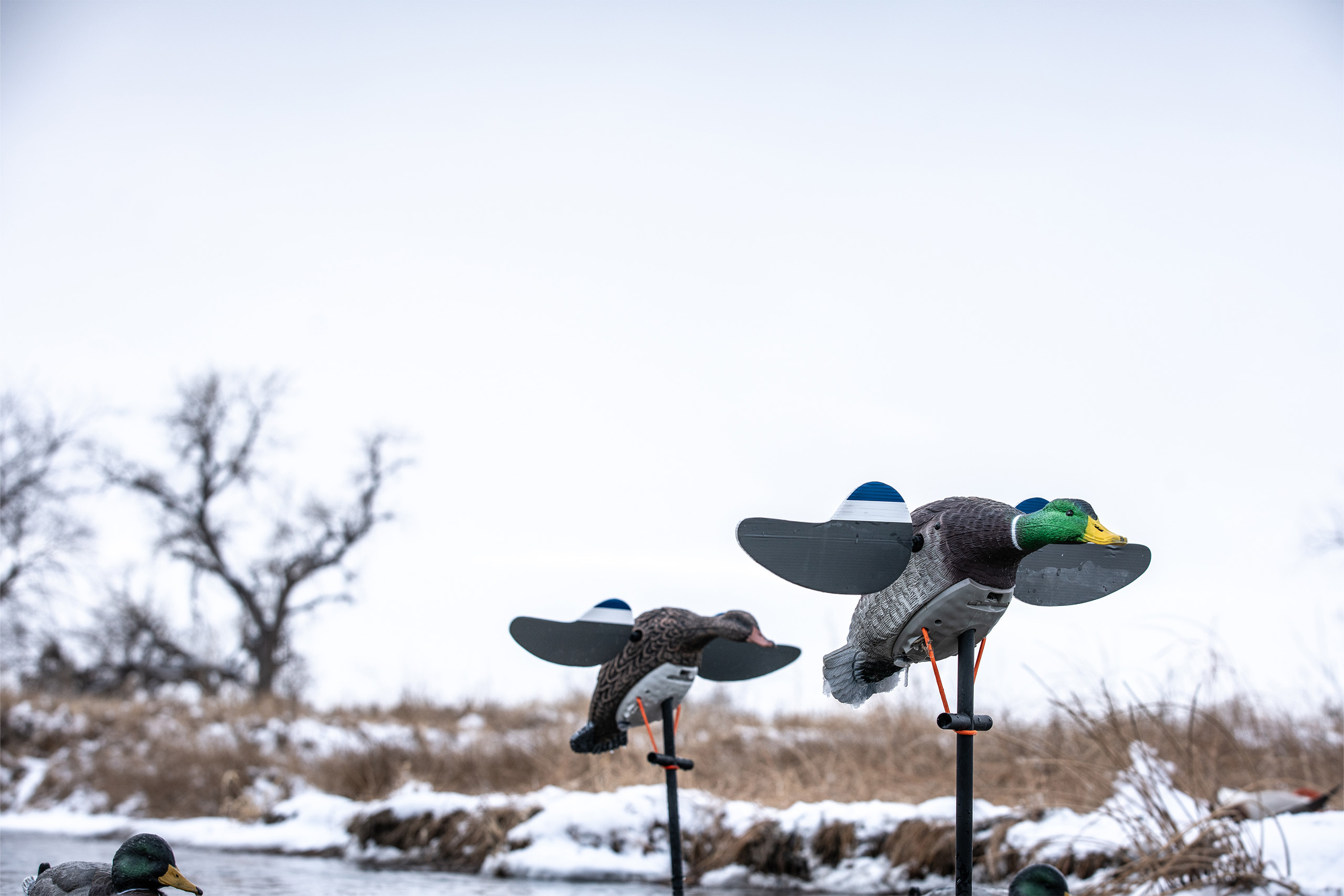
Spinners changed waterfowl hunting when they hit the market decades ago. A small motor powers rotating wings that flash light and dark colors in rapid succession. Ducks see this UV light strobe from two to three times farther than humans can detect it, which explains why spinners pull birds from extreme distances.
The design is simple but effective. Painted blades alternate between contrasting colors as they spin, creating an illusion that mimics landing ducks or birds lifting off water. Sunny mornings with calm conditions let spinners reach peak performance. The flash penetrates clear air and grabs attention from birds that might fly past other setups.
Strategic Placement for Maximum Effectiveness
Put spinners upwind of where you want birds to land. This lets ducks see the flash while still giving them space to drop in without flying over your position. Poor placement leads to birds committing overhead instead of finishing in your kill zone.
Field hunters get good results placing spinners 15 to 20 yards from the main decoy group. Water hunters should stake them near spread edges where birds spot the motion first but land among static decoys. Running multiple spinners on large spreads creates visual appeal from different angles, though more isn't always better on small water.

The Power of Flapper Decoys
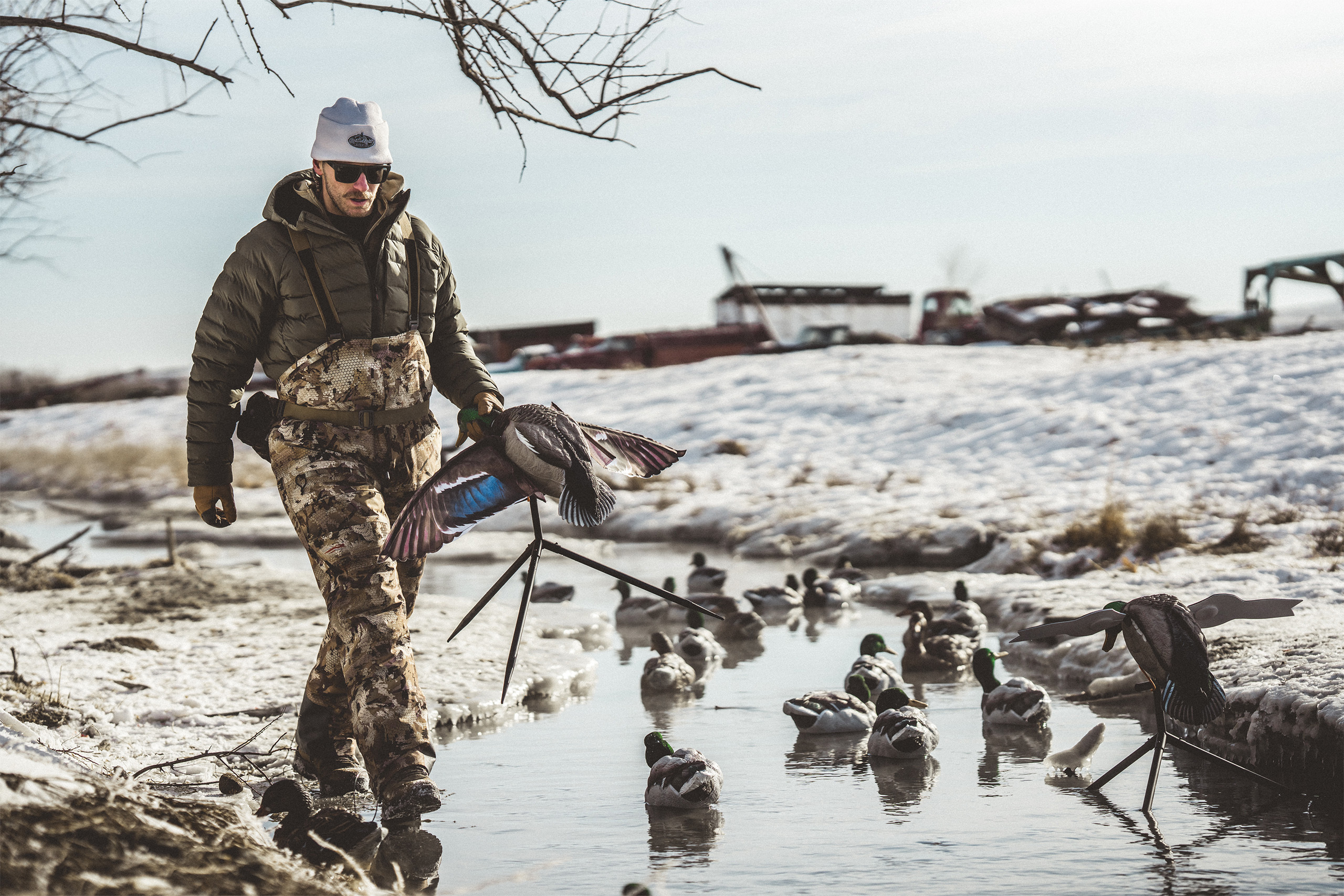
Flappers mimic the wing motion of real birds rather than creating artificial flash. Wings move up and down like geese landing or ducks communicating in a feeding flock. Birds that have learned to avoid spinners often respond better to this natural movement pattern.
Goose hunters rely heavily on flappers. Honkers key in on wing motion, particularly when you combine it with calling and flagging. The movement pulls attention without the harsh strobe that can spook wary birds. Set flappers away from blinds to draw eyes toward spread edges instead of concealment.
Late-Season Advantages
Hunting pressure teaches birds to recognize and avoid common decoy patterns. Late-season waterfowl see thousands of spinners each fall and grow suspicious of the familiar flash. Flappers offer something different. The wing motion looks natural enough to fool educated birds that ignore spinning decoys. Cold-weather hunters often consider flappers mandatory gear once birds start sorting real from fake.

When to Use Each Motion System
Several factors determine which motion decoy produces results on any given hunt.
Weather Conditions Matter
Spinners need sunshine to reach full potential. Calm, bright days let the UV flash carry across big water and open fields. Clouds reduce effectiveness because the strobe doesn't cut through overcast skies the way it does through clear air.
Flappers handle variable weather better. Wing motion stays visible through clouds, wind and light rain. Gray skies that limit spinner performance leave flappers unaffected. Switching from strobe to flapping motion on overcast mornings keeps birds working toward your setup.

Season Timing and Pressure
Early migrants respond aggressively to spinners. Birds fresh from northern breeding grounds haven't developed wariness toward spinning wings and often decoy readily. Mid to late season tells a different story. Weeks of hunting pressure educate waterfowl. Flappers then become more productive because the motion triggers less alarm in birds that have grown selective.
Terrain and Hunting Location
Your hunting environment shapes decoy choice:
- Open Fields: Spinner flash carries across flat terrain and pulls birds from long range
- Large Water Bodies: Strobe effect attracts ducks crossing big lakes and reservoirs
- Timber Hunting: Flapping motion fits tight quarters without overwhelming small areas
- Small Potholes: Natural wing movement works better than aggressive flash in confined spots
Making the Right Choice
Location, weather, season and pressure all factor into motion decoy decisions. What worked yesterday may fail today if conditions shift.
Combining Both Systems
Carrying both options lets you adapt. Big water spreads benefit from spinner attraction at distance while flappers add realism near landing zones. Small marshes and timber holes need subtlety, where flapping motion outperforms strobe effects. Some hunters run both types together, using spinners for initial attraction and flappers for finishing birds.

Control and Flexibility
Remote operation gives real advantages. Kill spinners when birds approach close or when geese swing toward your spread. Speed up or slow down flappers to match what live birds are doing. Adjusting from inside the blind beats having birds flare because you couldn't modify the setup.
Budget and Maintenance Considerations
Both systems need batteries and upkeep. Spinners cost less up front but burn through replacement wings with heavy use. Flappers have more complex motors but tend to last longer if maintained properly. Factor in battery consumption when comparing costs since power demands affect what you spend per hunt. Shop Now to find motion decoys that match your hunting style and budget.
Frequently Asked Questions
Do spinners scare geese away from duck spreads?
Geese dislike spinning-wing decoys. Hunt both species together by using remote control to shut off spinners when honkers approach. Rely on flappers and calling for geese.
How many motion decoys should I run in a typical spread?
One to two spinners handle most duck hunting situations. Too many overwhelm birds on small water. Add two to three flappers for goose hunting or pressured ducks. Balance motion against your static decoys rather than overloading the spread.
Can I use spinners in heavy wind conditions?
Heavy wind limits spinner effectiveness. Natural movement from wind makes the strobe less noticeable, and strong gusts affect blade rotation. Switch to flappers or water movement decoys when conditions turn blustery.
Are there legal restrictions on motion decoys?
Some states restrict or ban spinning-wing decoys during parts of the season or prohibit them completely. Check regulations before hunting. Flappers face fewer restrictions but confirm local rules.
How long do batteries typically last in motion decoys?
Battery life depends on the unit and conditions. Spinners run eight to 12 hours on fresh batteries. Flappers drain power faster because of complex motors and may need replacement every four to eight hours. Cold weather cuts battery performance for both types. Carry spares.