
The Complete Guide to Predator Hunting E-Callers: Features, Sounds & Setup
Posted by Lucky Duck Team on Apr 14th 2026
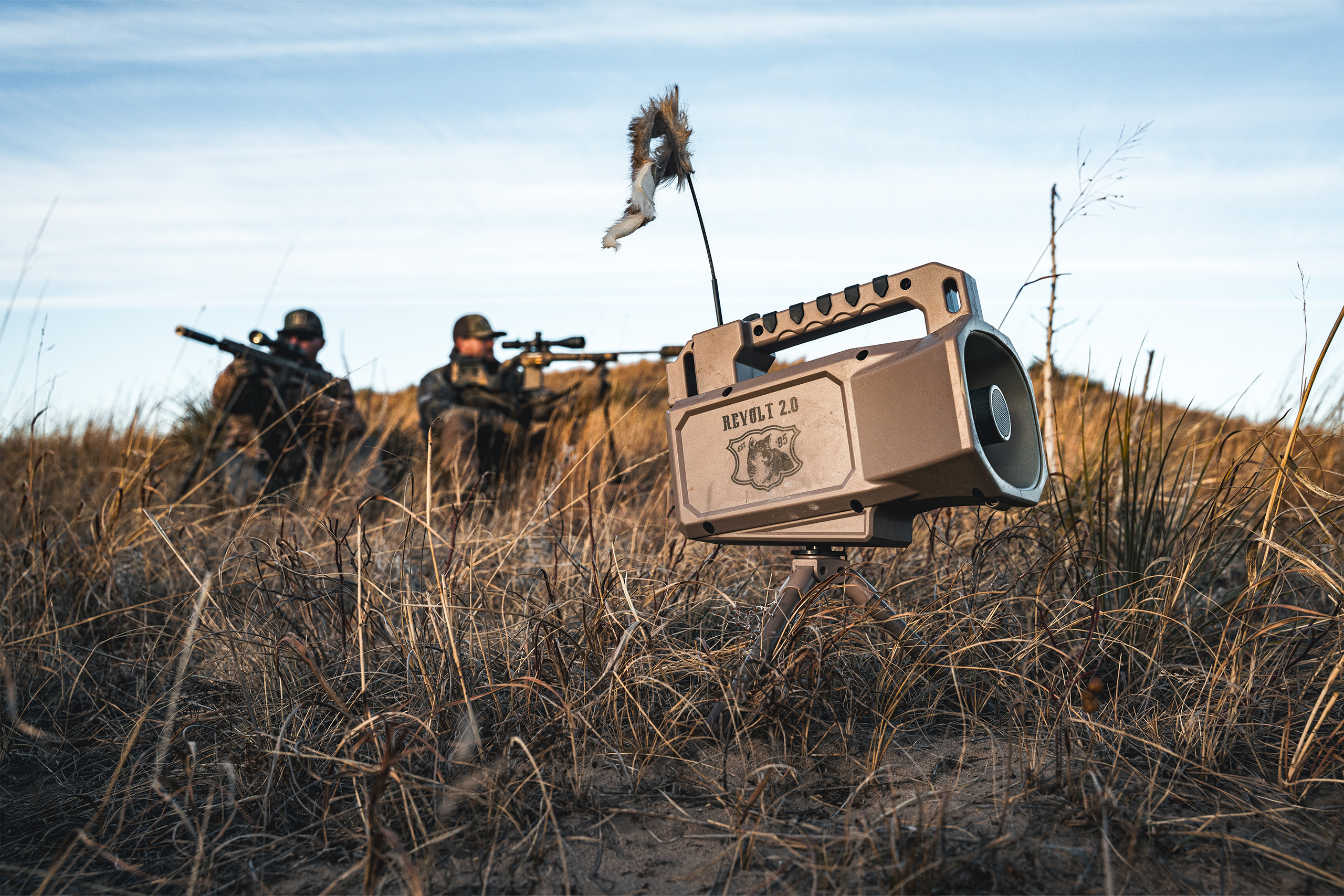
A U.S. Fish and Wildlife Service study found that a wild canine's hearing is by far its most effective hunting sense, more efficient than sharp vision or discerning sense of smell. Electronic game callers take advantage of this biology. They project consistent, realistic sounds at volumes you can control, giving you an edge that mouth calls simply can't deliver on their own.
Knowing how to pick the right e-caller and use it properly separates successful stands from wasted mornings.
Understanding E-Caller Technology
Modern e-callers play digital sound files through high-output speakers. You get a remote control, speaker unit and rechargeable battery as your core system. Better models use dual speakers to create directional sound that convinces predators they're closing in on real prey.
Remote Range Capabilities
Remote range matters. Quality units let you control the caller from 100 to 300 yards out. Set yourself up downwind while the speaker sits exactly where you want it. Predators commit to the sound without picking up on you.
Essential Sound Files for Different Predators
Coyotes
Coyotes come to rabbit, fawn and rodent distress calls. Cottontail distress works in most situations, but smart coyotes learn fast. Switch your sounds regularly. During breeding season (January through March), howls, barks and yips can be deadly.
Fox
Fox need higher-pitched sounds. Mouse squeaks, bird distress and small prey calls work best. Red fox especially respond to quieter, more subtle calling than coyotes tolerate.
Bobcats
Bobcats test your patience. They prefer sounds like woodpecker distress, jackrabbit screams and fawn bleats. Expect 15 to 30 minutes before they show up. Short calling sequences fail with these cats.
Access to diverse, high-quality e-caller sound files means you can adjust when hunting pressure changes or animals start avoiding certain calls.
Key Features to Look for in an E-Caller
Speaker Output and Volume
Speaker output controls how far your sound travels. Units that hit 110 to 120 decibels work for open country. Thick cover needs less volume, but you want that power when terrain demands it.
Battery Performance
Battery life dictates how long you stay out. Lithium batteries run 8 to 12 hours versus alkaline options that quit sooner. Cold weather drains batteries faster. Carry backups for long trips.
Durability and Construction
Your caller takes abuse. Brush, snow, drops onto rocks. Water-resistant housings keep moisture out. Rubber armor handles the beating. Cheap construction means you're buying twice.
Sound Quality
Sound quality matters more than features. Bad audio sounds wrong to predators. Tinny, distorted calls alert animals instead of fooling them. The best predator e-callers reproduce prey sounds accurately enough to bring in experienced predators.
Proper E-Caller Setup and Placement
Put your speaker 30 to 50 yards from where you're shooting. Predators fixate on the sound while you stay hidden. Elevated ground helps. Sound carries farther and doesn't get swallowed by low spots.
Wind direction runs the show. Predators circle downwind to smell what's making noise. Position yourself with wind at your back, speaker out front. Animals approach downwind of the caller, upwind of you.
Natural cover works better than trying to hide the unit completely. Tuck it behind brush, logs, rocks. Break up the outline. Predators spot a black box in the open.
Motion predator decoys paired with your caller create visual confirmation. Approaching predators see movement where they hear sound. They commit harder.
Sound Sequencing Strategies
Start quiet. Loud calls spook close animals. Run 60 to 90 seconds, then go silent for 30. Real prey acts this way. The pattern builds curiosity instead of suspicion.
Mix calling with silence. Nothing in nature screams nonstop. Wounded rabbits cry out, go quiet, cry again. Copy that rhythm.
Change sounds after 10 to 15 minutes of no response. The same call played too long educates predators. Different prey sounds or vocalizations trigger animals that ignored your first choice.
Temperature and season change the game. Hot weather means shorter sequences because predators bed down during day. Winter keeps them moving, hunting for calories. Adjust your timing.
Your Predator Hunting Success Starts Here
Quality equipment and solid technique both matter. Electronic callers expand your range, sound more realistic and give you control that mouth calls can't match.
Lucky Duck builds predator hunting equipment for hunters who need gear that works when it counts. Our e-callers pack field-proven sound libraries into housings that handle weather, drops and hard use. The difference between predators stopping at 200 yards and closing to shooting range often comes down to your caller.
Ready to upgrade? Shop our complete line of e-callers and bring more predators in this season.